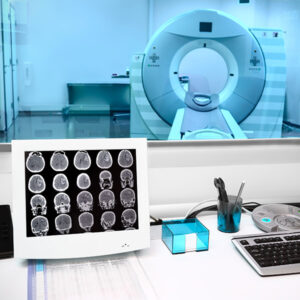
Room Requirements for CT Machines
What is a CT scan room, and why does its design matter? In medical imaging, precision and safety are key, and the CT scan room is central to this. Boasting a specialized CT machine, control areas for technicians, and a patient prep space, these rooms are the heart of diagnostic precision and patient care. Dive into our guide to learn how each component plays a vital role in the CT scanning process and what measures are in place to safeguard everyone involved. Key Takeaways CT scan rooms are designed with a focus on safety and functionality, consisting of a scanner, control area, and patient preparation area, each critical for an accurate diagnosis and comfort of the patient. Safety measures such as radiation shielding, emergency equipment, and ventilation and temperature control are essential components of a CT scan room to protect patients and staff from radiation and ensure the scanner’s optimal performance. The CT Scan Room: Layout and Components A CT scan, also known as computed tomography (CT), computed axial tomography (CAT) scan, or CAT scan, is a medical imaging technique that uses cross-sectional images of the body – including blood vessels – generated by X-ray pictures taken from multiple angles. A patient lies on a motorized table that slides into an opening in the CT scanner and produces detailed images within it. The three main areas associated with executing this procedure are: 1) The actual computer Tomograph itself. 2) Control room for supervising scanning activities. 3) Patient preparation area to ensure appropriate protocols prior to examination take place accordingly. All components inside these sections perform paramount roles so true diagnosis can be achieved without fail using computed tomography CT technology. Building a Room for a CT Scanner When it comes to constructing a room for CT scans, there are several important factors to consider. One of the most critical components is shielding the walls. This is necessary to protect individuals outside of the room from exposure to radiation. The walls of the CT scan room should be made of a dense material like concrete or lead, which will effectively absorb any stray radiation that may be produced during the scan. In addition to wall shielding, it is also important to install an X-ray glass window in the room. This window provides a clear view of the patient during the scan and allows medical professionals to monitor the procedure and ensure that everything is running smoothly. The X-ray glass window should have dimensions that are at least 48 inches wide by 36 inches high or 96 inches wide by 48 inches high to provide clear visibility of the patient and the scan [1]. It is also important to ensure that the room is properly ventilated to ensure the safety of patients and medical staff. The ventilation system should be designed to remove any potentially harmful particles from the air inside the room, such as those that may be produced during the scan. Finally, it is important to consider the layout of the room and the equipment that will be used during the scan. The room should be spacious enough to accommodate the CT scanner and any additional equipment that may be needed while also providing enough room for medical professionals to move around comfortably. The CT Scanner The CT scan is conducted using a specialized machine that is shaped like a doughnut. The X-ray source inside the gantry rotates around the patient, emitting focused beams of radiation throughout the body. This allows for three-dimensional digital images to be generated with greater detail than traditional X-rays produce—making it an invaluable tool in diagnosing conditions accurately and quickly. CT scanners use complex mathematical equations to process data from this advanced system into detailed pictures within interior anatomy structures, resulting in far higher quality imagery compared to conventional X-ray photography techniques. Control Area The control room of a CT scan is where the technicians manage and adjust scanner settings for optimal patient safety as well as to attain ideal image quality. This hub is outfitted with all necessary computer controls, plus shielding from radiation that reaches beyond its door in order to protect personnel. That way it offers not only operational capabilities but also ensures security against any inadvertent exposure to secondary rays if left open by mistake. Patient Preparation Area The beginning of a CT scan starts in the patient preparation room. This area is used to get information on the medical status and imaging goals of each person, offering instructions about what needs to be done during this procedure as well as making sure their comfort and safety are kept intact throughout it. The layout of this space ensures that patients remain visible so they can continually monitored by technicians while taking into account all necessary details vital to the successful completion of these scans, with focus always being placed on providing superior quality care from start to finish. Thereby emphasizing an individual-oriented approach to tackling CT scan treatments. Safety Measures in the CT Scan Room In a CT scan room, the highest priority is safety for both patients and staff. This includes comprehensive precautions such as radiation shielding, emergency equipment on site, suitable ventilation, and temperature control regulations in place to ensure protection from ionizing radiation. During scans, only the patient is allowed, but radiographers are equipped with an intercom system so that any necessary communication can be handled quickly if needed. Radiation Shielding In order to protect people from the potential side effects of radiation dose and maintain a clear imaging field, shielding is an essential factor in CT scan rooms. This includes materials such as lead, composite materials containing lead particles, concrete, or gypsum, which are used to make protective walls, floors, and doors, along with operator X-ray screens that reduce secondary exposure beyond the area entranceway. In addition. It has been proven through research that proper utilization of these components can decrease scattered radiation for both patients and operators by significantly reducing their exposure rate. Overall, it’s